Floating Shelves vs Traditional Bookshelf: Which Storage Wins?
A direct look at the weight limits, installation hassles, and room footprints of wall-mounted ledges versus classic floor units.

By Hana Elder · August 18, 2026 · Updated October 16, 2026
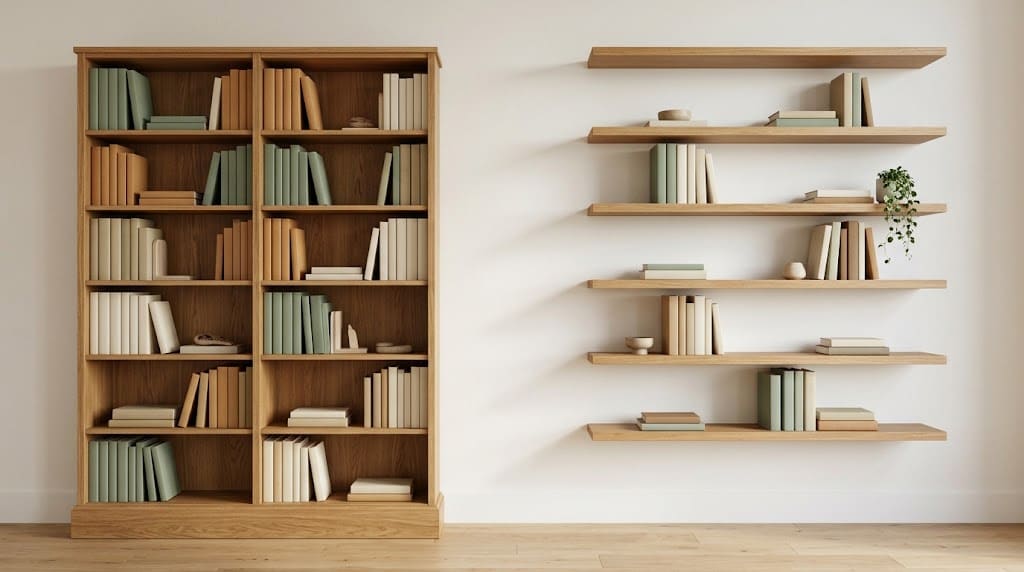
Understanding Weight Limits And Wall Anchors
Floating shelves rely entirely on internal brackets screwed into your wall studs. If you miss the wood framing, drywall anchors will eventually sag under heavy loads. A solid wood plank anchored securely can hold quite a bit, but particle board versions often crack under pressure.
Traditional bookcases distribute their weight down through vertical side panels straight to the floor. You don't need to hunt for studs unless you live in an earthquake zone and must secure the top anti-tip strap. That structural simplicity makes floor units much safer for massive hardcover libraries.
| Aspect | Floating Shelves | Traditional Bookshelf |
|---|---|---|
| Floor Footprint | Zero square inches | Takes floor space |
| Weight Capacity | Limited by wall anchors | Supports heavy loads |
| Installation | Requires drilling and studs | Ready out of box |
| Mobility | Permanent wall fixtures | Easy to move |
| Capacity | Holds few items | Stores hundreds of books |
Floor Space And Room Layouts
Floor space is precious in tight quarters. Wall-mounted options keep your walking paths completely clear, which works wonders for compact spaces. If you're arranging a tight bedroom layout, hanging ledges leave room for other furniture below them.
Classic bookcases project outward by 10 inches to 15 inches into your room. That extra depth eats up usable floor area and blocks baseboard heaters or wall vents. But they fill tall, empty vertical walls much faster than hanging multiple individual planks.
Installation Effort And Permanence
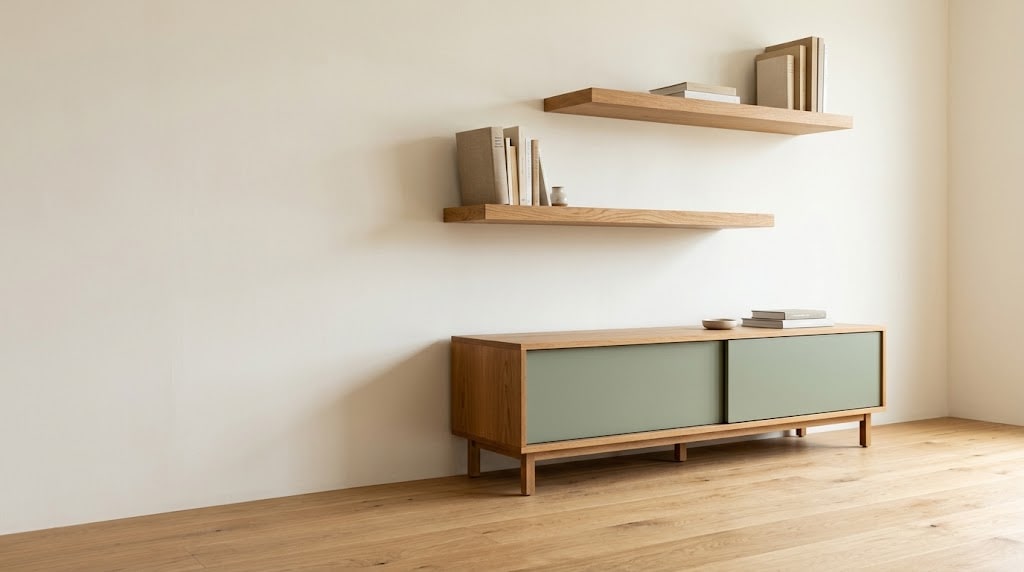
Putting up hanging ledges demands patience, a stud finder, a level, and a power drill. One crooked pilot hole means patching drywall and starting over. Once they are up, changing your mind about their placement leaves visible holes behind.
Floor-standing units require almost zero prep work beyond tightening a few cam locks or hex bolts during assembly. You can slide them across the room whenever you want to rearrange your layout. Renters usually prefer standing furniture to avoid drilling dozens of holes in leased walls.
Storage Capacity And Display Potential
You simply can't store a large book collection on wall ledges without risking wall failure. They work best for a few decorative objects, small potted plants, or a curated row of your favorite reads. Overloading them turns a stylish display into a structural hazard.
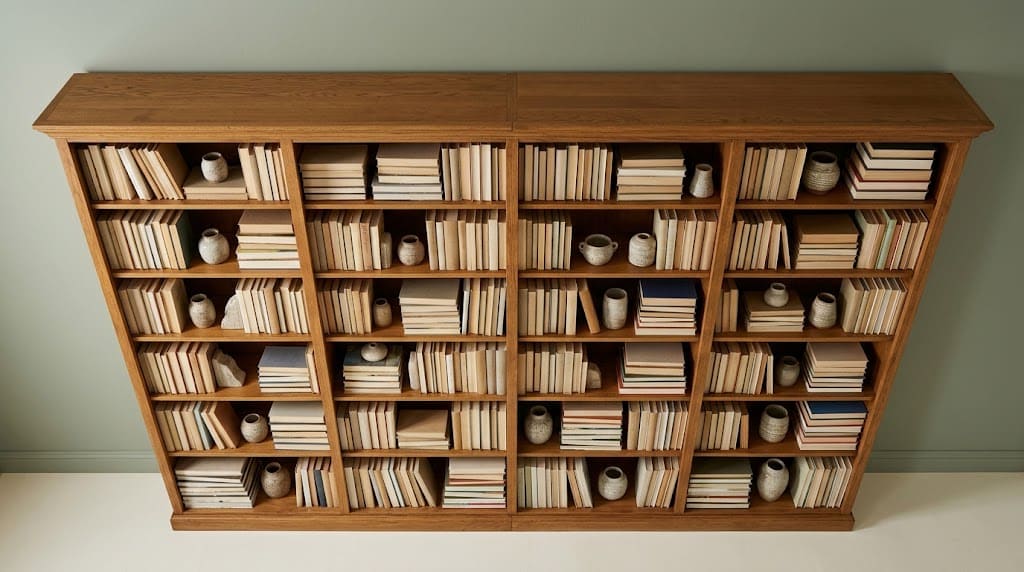
Tall shelving units swallow hundreds of volumes across multiple tiers. If you own a massive library, a standard bookcase is the only practical choice. It organizes deep rows of books and tall binders that would tumble off shallow wall mounts.
Which One Should You Get?
Get floating shelves if your floor area is maxed out and you only plan to display a few light items. They keep small rooms feeling open and airy.
Skip the wall ledges if you have heavy textbooks, renters restrictions, or zero interest in measuring stud spacings. For large collections, a classic floor unit wins every time.
Material Durability And Structural Integrity
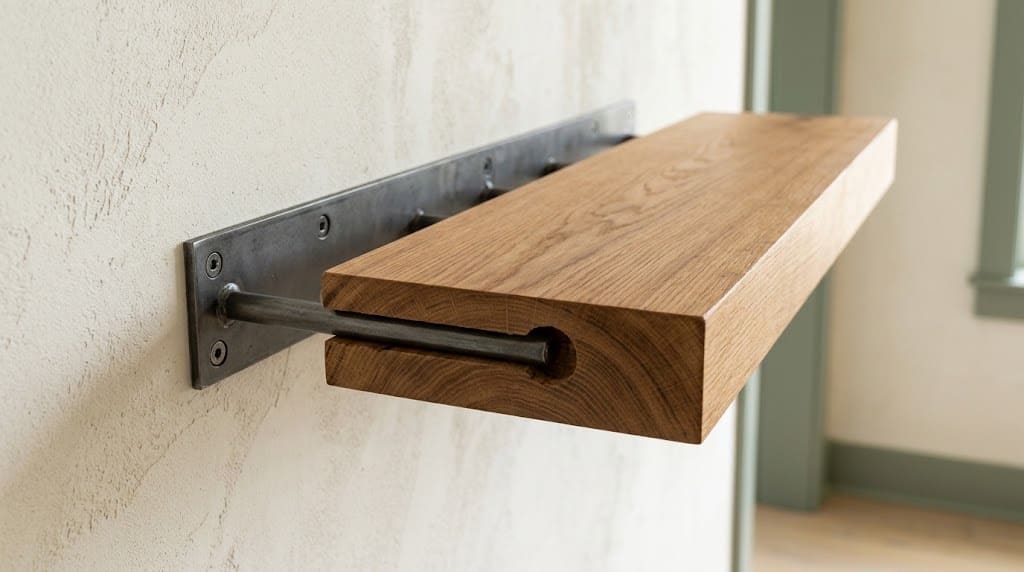
Traditional bookcases use manufactured wood like MDF or particle board wrapped in a paper veneer, while higher-end models feature oak, pine, or rubberwood veneers over plywood cores. That thickness gives the shelves enough rigidity to resist bowing under a dense stack of paperbacks. Floating shelves depend on a hidden hollow-core design or a solid piece of lumber bolted directly to a steel backplate. If the steel support rod inside a floating shelf is too short, the outer edge starts dipping within months of loading.
Solid hardwood floating planks handle moisture and humidity better than fiberboard variants, which tend to swell and disintegrate if water gets into unsealed screw holes. A heavy oak bookcase can handle decades of relocations if you don't drag it across carpets while fully loaded. Particle board bookcases often snap their cam locks apart the moment you lift them off the floor during a move.
Cleaning Access And Dust Accumulation
Dust settles on horizontal surfaces rapidly, and your choice of storage drastically changes your weekly cleaning routine. Standard bookcases sit directly on the floor or on short legs, creating a narrow gap underneath where stray papers and dust bunnies gather beyond the reach of a standard broom. You have to empty every single shelf to pull a heavy wooden unit away from the baseboard and sweep behind it.
Floating shelves leave the entire floor surface open for a vacuum attachment or a flat mop to glide underneath without obstruction. But wiping down individual wall brackets and dusting around precarious knickknacks perched at head height takes steady hands. Anyone with vaulted ceilings or high wall mounts will need a sturdy step stool just to reach the top plank for dusting.
Questions I Kept Running Into
Can floating shelves hold heavy books?
Only if they are screwed directly into at least 2 wall studs and use heavy-duty steel internal brackets. Hollow-wall anchors will pull out of drywall under the weight of more than a few heavy books.
Do traditional bookcases need to be bolted to the wall?
Yes, tall units should always use an anti-tip wall strap to prevent them from tipping over, especially if you have children or pets in the home.
Which option is easier to clean around?
Floating shelves make vacuuming and mopping much easier because the floor underneath them remains completely unobstructed.
Spotted an error or a product that is no longer available? Tell me and I'll fix it.
Newsletter
Get our best picks in your inbox
Research-based product picks. No spam, unsubscribe anytime.
About the Author
Home Organization Editor
I compare storage bins, shelf risers and drawer systems by their real measurements, materials and long-term owner reviews, so what you order fits your space the first time. No brand sends me anything.
More Guides

Choosing a Cabinet Organizer: Specs That Matter + 10 Options

Floating Shelves: 8 Options Worth Your Money (2026)

How to Choose a Closet Organizer in 2026 (Plus 5 Picks)
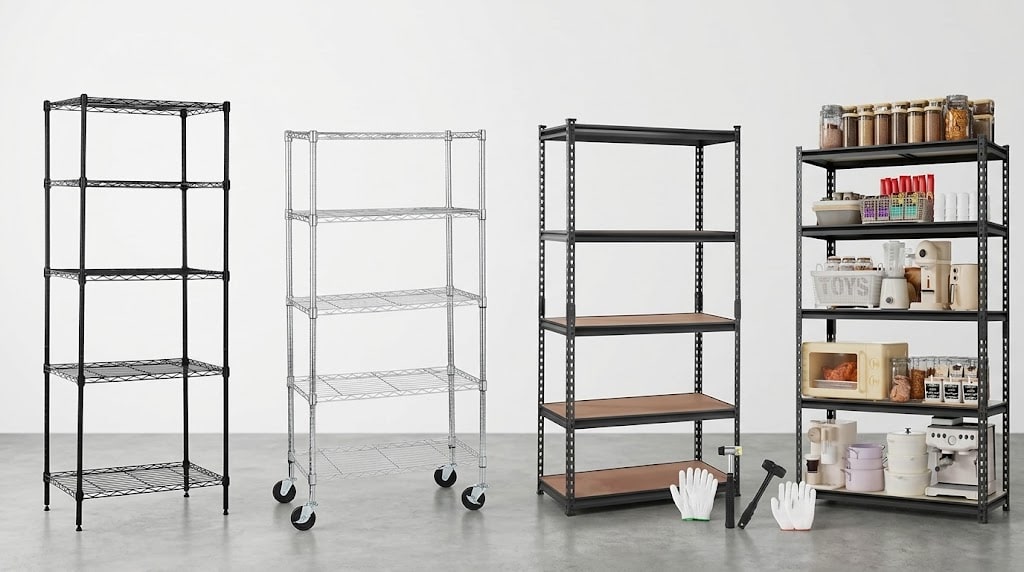
Garage Shelving Buying Guide 2026: What Matters, and 8 Options

Choosing Food Storage Containers: Specs That Matter + 8
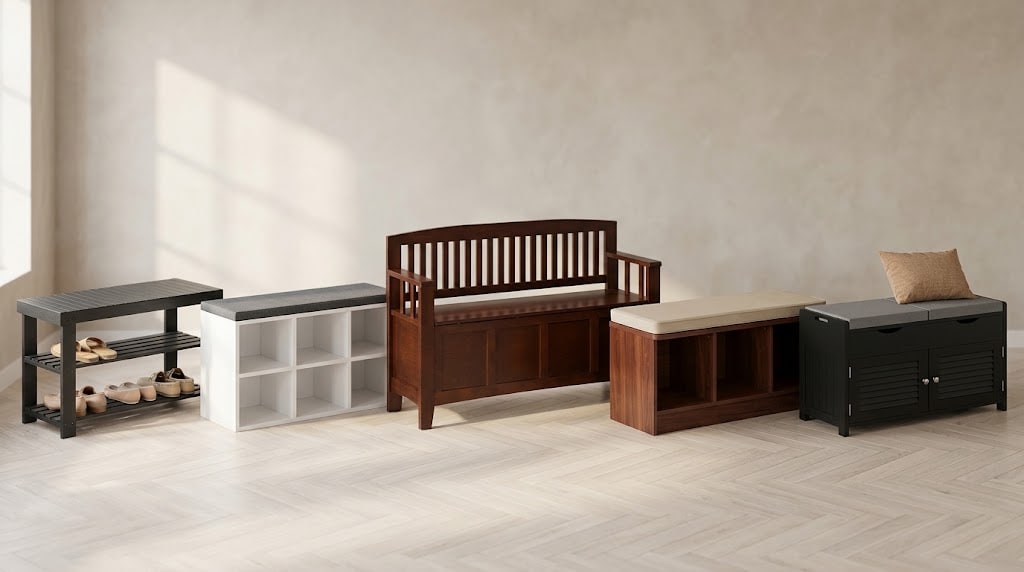
Entryway Bench With Storage: 5 Options Worth Your Money (2026)

The Shelving System Shortlist: 5 Picks I Keep

Rug Size Buying Guide 2026: What Matters, and 5 Options

What to Look for in Storage Bins (2026) — and 8 I’d Consider

A Short List of Good Storage Shelves — 7 Picks for 2026
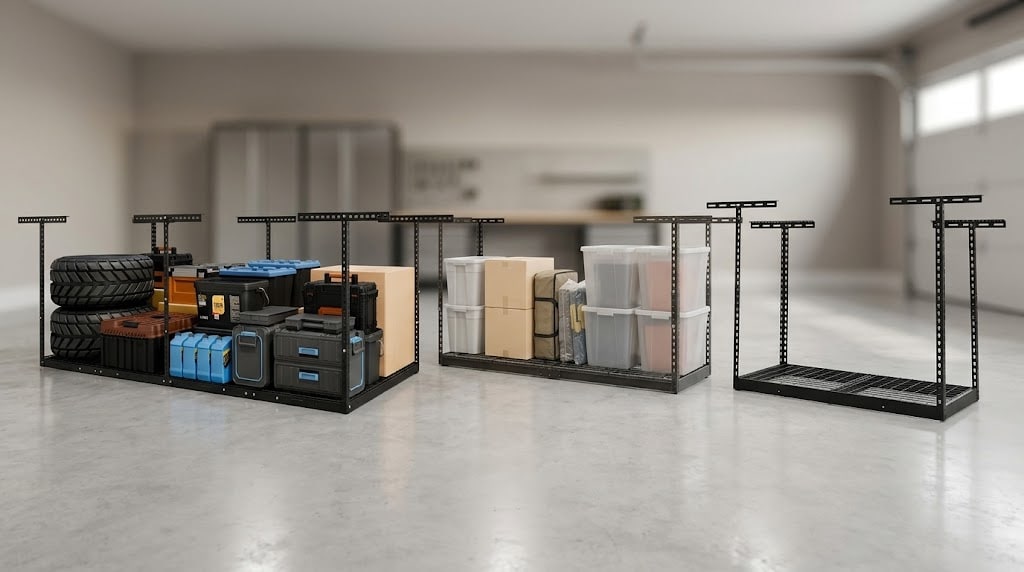
The 5 Overhead Garage Storage Racks I’d Actually Buy
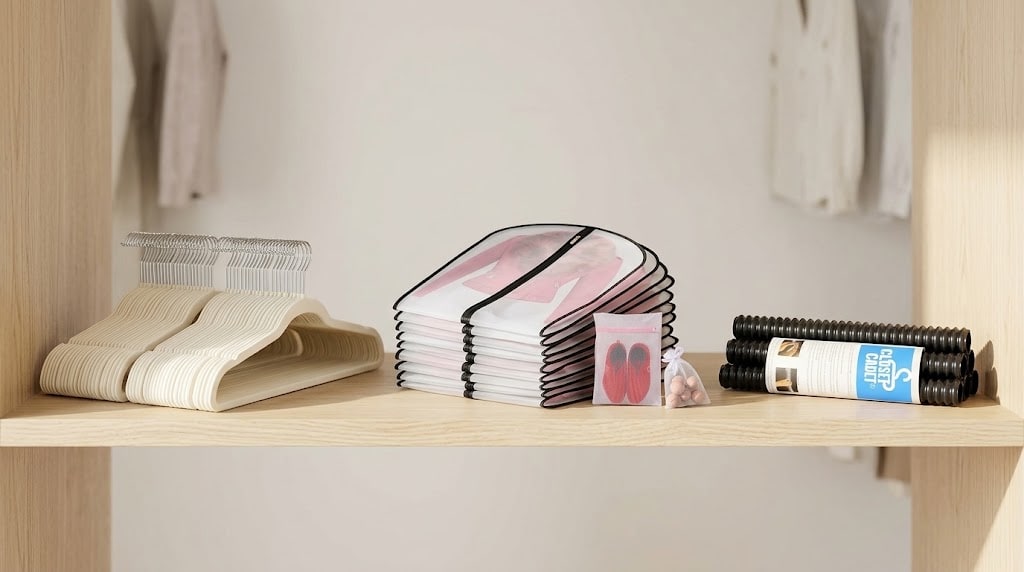
Dealing With Closet Wrinkles: 8 Hangers & Bags Worth Buying